
[The following are a series of excerpts from the biography of Ayesha Rauf (Ayesha Mayin) (1917-1992) by Farzana Haniffa (Ayesha Rauf: A Pioneer of Muslim Women’s Emancipation in Sri Lanka, Social Scientists’ Association, Colombo, 2014) who migrated to Ceylon from Malabar through marriage in 1944. Her work in Muslim women’s education and her public life spans across Malabar and Ceylon. Haniffa remarks that despite her pioneering role, “Rauf is a personality who has been “hidden from history.” Fallen through the cracks even of Sri Lankan feminist historiography, Rauf hitherto merited a short footnote in the narratives on education, politics or the status of Sri Lankan Muslim women.” (2014: 1-2). If this is the case in SL, it is doubly true for Kerala. Ayisha Rauf’s life as narrated by Haniffa is such a marvellous illustration of what educated Malayali women were, and are, capable of, once freed from the shackles of narrow family and regional identification. It is worth noting that the same trajectory seemed completely unavailable to her peers in Kerala who had attained the same levels of education and work experience — neither her Muslim nor non-Muslim peers…
Farzana Haniffa is a Professor at the Department of Sociology at the University of Colombo, SL.]
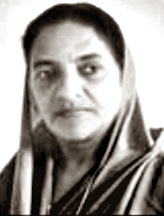
(p.3)
The Indian Connection
Ayesha Beebi Mayen was born in 1917 in Tellicherry in the province of Travancore-Cochin [sic. Actually, Tellicherry is a town in Malabar, in present-day north Kerala], now Kerala. Ayesha belonged to the Mappila community, the Muslim community in Kerala. Ayesha’s mother was Puthiya Walapul Kayumma. She had two sisters and a brother. The four children in the family who lost their mother when Ayesha was six years old, were raised by their father in a somewhat unorthodox manner….
(p.7)
Modernization in the 1920s
Ayesha’s father, V. Kunath Mayen, held many unorthodox views that clashed with the accepted notions of the Mappila community. Mayen’s determination to provide all his children, male and female, with a sound and rigorous education was one such revolutionary view. It even earned Mayen the nickname of “Kafir Mayen” or the ‘infidel.’ Because of his progressive ideas on female education, his two older daughters gained professional qualifications at a time when, according to Ayesha, not many
Muslim women of the Mappila community were allowed to attend secondary school.
V.K. Mayen traveled extensively and as mentioned earlier was highly involved in politics, and thus was no doubt influenced by the political movements of his time. Mayen was appointed the diwan of Conmanore under the Maharajah of Conmanore. Mayen was also the president of the Tellicherry branch of the Indian National Congress. Later, after the formation and ascendance of the Muslim League in southern India, Mayan became its local president in Tellicherry. As a child, Ayesha
witnessed many heated debates on the nationalist politics of the time. Through her father, Ayesha met many of the prominent personalities in Indian politics. Gandhi, Sarojini Naidu and Nehru
were among the leaders to whom she was introduced on their visits to her hometown.
(pp 10-13)
Early Years in Kerala
Thanks to their father’s liberal views, Ayesha Mayen and her older sister received an extensive education. They attended secondary school at the Sacred Heart convent in Tellicherry where the two
Mayens were the only Muslims. Ayesha Mayen was a successful student and was appointed head prefect during her final year. After completing her secondary education, Ayesha Mayen went
to St. Anne’s College and later Queen Mary’s College, both affiliated to Madras University, and obtained a Bachelor of Arts degree. Her sister attended medical school and qualified as a
doctor, a rare achievement for a Muslim woman during those times [This sister was Amina Hashim]. Ayesha studied political science, English, French, economics and history while at college. She played tennis and debated for her school team. When Ayesha graduated she became the first Mappila woman in Malabar to receive a university degree.
After graduation Ayesha worked briefly as a teacher at a local training college and then became an inspector of schools. Her first appointment was as sub inspector in Malabar. But her job as an inspector, since it involved extensive amounts of independent travel, was looked upon with disfavor by the Muslim community. “When I began my work I had many a threatening letter from fellow Muslims saying I was a disgrace,” Mayen once stated (Sunday Observer, 10 January 1988). Furthermore, the fact
that she lived on her own with a maidservant caused much comment.25 Subsequently, Mayen began to work with her brother who was also an inspector of schools. After some time as a subinspector, Mayen went on to pursue a postgraduate licentiate in education at the Lady Wellington Training College in Madras. After achieving her licentiate, Mayen was appointed to a special post as officer for Muslim education in the Madras Educational Service. She worked in this capacity for four years until her
marriage.
Muslim Girls’ Education
During her four years as special officer for Muslim education, Ayesha Mayen worked towards increasing the standard of Muslim girls’ education in the area. One of her very first projects was the opening of a number of small elementary schools for Muslim girls. Though received with caution at first, these schools soon flourished. Encouraged by the success of this elementary education scheme, Ayesha moved on to the rather more challenging realm of secondary schools. She was instrumental in the opening of a high school for girls in the south of Malabar. This school was a highly ambitious project with an initial student body of 200 and its own hostel facilities. Ten years after its
opening, the school became one of the most important educational institutions in the region.27 During this time Mayen was also involved with several local Muslim women’s organizations
engaged in community-based activities.
Ayesha Mayen was readily recognized and highly regarded within her community in Kerala as a proponent of greater rights for women. A letter of reference for her written by a prominent member of the Mappila community states that Ayesha Mayen was “keenly interested in the emancipation of her
sex in her community.” Not only was her career a milestone in the history of female education among the Mappilas, but it was also “a matter of vital importance to the cause of ameliorating
the conditions of Mappila women folk.” Her contribution to the community continued until her 1944 marriage to the Ceylonese M.S.M. Rauf. She subsequently migrated to Ceylon with her
husband.
Arrival in Ceylon
Ayesha’s husband, M.S.M. Rauf, was a Ceylonese businessman who lived in Coimbatore, India, in the 1940s. Rauf met Ayesha Mayen through her superior, the assistant director of education, who was a close friend. After a brief courtship, which, in deference to the wishes of their respective communities, was conducted exclusively through correspondence, the couple was married on 3 February 1943. The wedding took place in Coimbatore with the apprehensive consent of M.S.M. Rauf’s parents. (Rauf’s family felt that a woman with Ayesha’s superior education would not be suitable for a son who had barely completed secondary school.29) Rauf’s father, C.M.M. Sheriff attended the wedding
and a year later the couple left for Colombo.
M.S.M. Rauf hailed from a family of business people from Ganetenne in Sri Lanka’s Central Province. His father, moved to Colombo as a child and later worked with his uncle, a shop owner. He subsequently started up his own ventures and during the 1920s sustained himself as an umbrella merchant. His shop was closed during the depression of the 1930s. Sherif also ran one of Colombo’s first grinding mills at Old Moor Street. M.S.M. Rauf was the eldest in a family of seven. As a child, he attended Zahira College, Colombo, during the time of T.B. Jayah’s principalship.He studied up to the Junior Cambridge examination, and joined his father in business. M.S.M. Rauf, with his brother Nizar,
managed a hardware store at Quarry Road, Colombo, until the outbreak of the Second World War. At the inception of the war, under the name of the Hafira Trading Company, then registered under the name of Rauf’s brother-in-law M.H.M. Munas, Rauf landed the very lucrative contract to supply the British army with vegetable produce from southern India. The venture was undertaken in 1941, financed by Rauf’s mother Hameeda Umma. M.S.M. Rauf ran the Indian end of the business from Coimbatore. It was while he was thus employed in India that Rauf met and married Ayesha Mayen.
(pp27-28)
Muslim Ladies’ College
Muslim Ladies’ College, Colombo, was founded in 1947 on what is today Fareed Place in Bambalapitiya. The opening of this school – the first free educational Muslim institution for girls that taught in English – was an important landmark in the history of the Muslim community. Though schools for Muslim girls had opened and functioned in other parts of the country since the turn of the
century, Muslims in Colombo were slow to open one within the city. The long-term goal of the school was to provide Muslims with an institution that was of the calibre of the prestigious English girl’s schools in Colombo. The decision to start Muslim Ladies’ College in Colombo signaled the acceptance of the need for secondary education for Muslim girls which was broad-based. Muslim Ladies’ College considerably enhanced the educational prospects of the larger community of Muslim women in and
around Colombo and, because of its residential facilities that were instituted shortly after it opened, of those residing in the more distant Southern and Eastern provinces. It is as the founder
principal of this school that Ayesha Rauf is best remembered.
(p. 32)
…
Recollecting the days when the school had just opened, former teacher Iris Jayasooriya stated that Rauf even accepted women far beyond school-going age into her school. According to Jayasooriya the primary classes were often attended by a number of older students. Many older girls would treat the school as a place for an outing, and come dressed in their best clothes. Although this was never the intention of the school, Ayesha Rauf never sent them back. She states that Ayesha Rauf understood
the needs of these young girls who were often confined to the limits of their homes. Therefore, she encouraged them to attend the school whenever they could. “… this was good in the long run because these students were exposed to the world of education. Some of them sent their children to the school later on and this was a great asset to Muslim Ladies’ College,” Jayasooriya said. One of the primary goals of the ‘Ayesha Rauf School’ was to provide a stable environment for many of the poorer slumdwelling children. In fact, Rauf was especially eager to extend the facilities of her school to the disadvantaged sections of the populace. Part of her vision for the education of women was to
get as many women as possible to acquire at least basic literacy. Therefore, the school was run along very unorthodox lines.
(p. 29)
… In the words of a prominent alumna of the school, Anberiya Hanifa, Ayesha Rauf had a vision for the education of Muslim women. However, as Rauf herself had stated, faced with a community not too concerned with education, getting Muslim Ladies’ College off the ground was an arduous task. Regardless of the publicly professed need for the school in the newspapers, and among community leaders, support was not readily available in the immediate aftermath of the Second World War. A part of the initial funding for the school was provided by Sir Razik Fareed and his sister, who each contributed Rs.1,000, and by the Moor Ladies’ Union, which contributed Rs. 500. The remainder was
raised through other means, including the selling of flags at the Pettah railway station by Ayesha Rauf herself. As she once stated:
We even had to go around with tills to collect money for the school,
with the young boys of the Moors Islamic Cultural Home. I stood
at the Fort railway station to collect whatever help we could get.
(pp. 35-37)
Ayesha in Politics
During the time of her tenure as the principal of Muslim Ladies’ College, Rauf was also involved in politics. She contested at the general election in 1947 (unsuccessfully) and successfully ran in municipal elections thereafter until her retirement from politics in 1962. Sometime in the 1960s there was considerable protest from her students’ parents regarding the amount of time that Ayesha Rauf spent on politics. They claimed that Rauf’s extensive involvement in politics impeded the progress of the
school. Rauf and Muslim Ladies’ College were accused of producing only ‘good cooks.’ A petition to have her removed was circulated.
During the same period, the much-publicized school’s takeover was instigated and Muslim Ladies’ College was handed over to the government. The general election of 1960 brought to power the Sri Lanka Freedom Party (SLFP) under the leadership of Sirimavo Bandaranaike, wife of the slain former prime minister S.W.R.D. Bandaranaike. The SLFP had campaigned on establishing a unified system of schools under direct state control. Therefore, when it came to power one of its first acts under
Minister of Education Badiuddin Mahmud was to pass the Assisted Schools and Training Colleges Act of 1960. This act made the director of education the manager of every assisted school to
which the act applied. Although there was much opposition from other denominational schools, particularly the Catholic schools, there was not much that changed for Muslim Ladies’
College. Since the school was already funded and regulated by the government under the free education scheme, the transition was not difficult. In fact, the school prospered further under the
patronage of Minister of Education Mahmud.
The move, however, impacted significantly on Ayesha Rauf’s own career. Under Sri Lankan law, no employee of the state is allowed to run for office. And, as the principal of the newly state-controlled Muslim Ladies’ College, Rauf was no longer eligible to contest municipal elections. There was some agitation and protest as to the fairness of this rule, but it had little effect in Rauf’s case. She was called upon to choose between her political interests and her teaching career. At this point Rauf chose to
maintain her position as principal; she felt that her energies would be best utilized in this arena, “in the service of the community.”
Thus, in 1961, Rauf handed in her resignation to the Municipal Council and brought to a close a successful 12 years in politics. She continued to serve as the principal of Muslim Ladies’’ College
until her retirement in 1970. In 1970 Ayesha Rauf, aged 56, retired from her job as principal of Muslim Ladies’ College. Barely a year later, she left for Zambia to work as a high school teacher of political science.
(pp 40-42)
Since her arrival in the island from Kerala, Ayesha Rauf maintained close relations with members of the Malayali community in Colombo. Her decision to venture into politics was applauded by members of this community who saw her as an ally, as one of their own. The Malayalis of Colombo, though
substantially depleted in numbers at the time of Rauf’s entry into politics, had previously played an important part in the trade union and Left politics of this country. In the early 1930s, however,
the Malayalis became targets of chauvinistic agitation by trade union leaders. In attempting to come to terms with unemployment and the extreme hardships of the depression, some union leaders
like A.E. Goonesinha played the ‘communal card.’ Ethnic differences were used as a way of addressing the problems of their main support base, the Sinhalese workers. Union leaders incited Sinhalese workers against Malayali labour with the claim that these “foreigners” were taking away their jobs. At that time the newly formed Sri Lanka socialist party, the Lanka Sama Samaja Party (LSSP), stood by its anti-racist policy and supported the rights of Malayalis, but many Malayalis returned to Kerala during
this era.
Some of the Malayali workers who stayed on formed the base of the Communist Party in the 1940s, and many Communist leaders from Kerala such as A.K. Gopalan frequently visited Sri Lanka. Ayesha Rauf, who had their support, was also generally sympathetic towards the Left when she entered politics. In a bid to serve the interests of her compatriot Indians residing in Sri Lanka, Rauf also joined the Ceylon India Congress (CIC) and worked in close alliance with Abdul Aziz, the CIC leader who
was a sympathizer of the Communist Party. During her days with the Ceylon India Congress, Rauf was involved in the campaign to guarantee Indian plantation workers their civic rights. The elections of 1952 were to be based upon the 1950 register which, subsequent to the citizenship bill of 1948, disenfranchised a majority of persons of Indian origin residing in the island. In response, the Ceylon India Congress staged a massive campaign to obtain voting rights for those who had opted under the law to become citizens of Sri Lanka. The campaign included satyagraha by leaders outside the premises of the prime minister’s office, and a hundred-day-long hunger strike. Rauf was heavily involved with the activities of the CIC during this time.
Although Rauf was not a member of any of the Left parties, her early affiliation with the Left was never doubted. Rauf’s nomination for the post of deputy mayor in 1952 was supported by the leftist members of the Municipal Council. And, even after her 1954 move to the more right-leaning UNP, Rauf continued to be regarded by many of her contemporaries as a proponent of
progressive politics.
To return to Rauf’s political debut, she contested the parliamentary elections in 1947 as an independent candidate for the Colombo Central multi-member constituency. Rauf was up against 16 others, all men, many of them seasoned political veterans. One of her opponents was M.H.M. Munas, another Muslim who was also her husband’s brother-in-law. Though she gave a good fight, Rauf did not win a seat at these elections. …
In 1949 Rauf contested Municipal Council elections, again as the only independent woman candidate. She contested the Pettah ward and won with an impressive majority, ousting the sitting member, Deputy Mayor M.F. Ghany. With this victory Rauf joined Meena Ratnam and Vivienne Goonewardene to become one of the three women municipal councilors at the time.She was also the first ever Muslim woman to hold a seat in the Municipal Council.
[However, she would later join the UNP, until her political career ended after the debate whether the Muslim Ladies’ College was state-sponsored or not, in 1961. She tried to re-enter public life in 1977 but her long absence because of her teaching stint in Zambia worked against her.]
(p 45)
…. During her twelve-year political career, Rauf acted in keeping with her declared intention to speak for women and the poor, and earned a name for herself as an advocate of issues of women and poverty. Just after her appointment as deputy mayor of Colombo, Rauf gave an interview declaring her immediate goals: to achieve equal pay for women, improve and establish more creches, and alleviate the housing and sanitation problems of Colombo. She also advocated the abolition of the dowry system among Muslims and even hoped to bring about a law to ban the practice. Even during her time with the UNP, Rauf persisted in her quest to better the living conditions of her constituents and remained the champion of the common people.

 Swatantryavaadini
Read 🙂 thank you!🙏🏼
LikeLike