
[This is a short piece from my translation of Amma’s autobiography Pathikayum Vazhiyorathe Manideepangalum (translated as Wayfarer-Woman and the Wayside Lamps, forthcoming from Zubaan, Delhi). Amma was a feminist from the 1930s who, quite removed from her contemporaries, understood women’s emancipation as radical equality — and was punished for it. This piece is especially interesting because in it she responds to a humorist, Sanjayan, who made a sneering remark about her very-popular travelogue, based on her travels in Europe in 1935, titled Njaan Kanda Europe (The Europe I Saw), which was also published in English as A Peep at Europe. He suggested that it needed but one change — of the title, from Njaan Kanda Europe (The Europe I Saw), to Europe Kanda Njaan (I Who Saw Europe)!! The insecurity of modern-educated and reformist Malayali men about confident and individuated women was conspicuous in the remark. The following is Kalyani Amma’s reflections on this incident, written in the 80s, in the late 1980s. The difficulties with recall are obvious, but it is a remarkable work — a tremendous effort at self-assertion in a world that had punished her very severely for the life of ‘lived’ cosmopolitanism that she chose. The English version of the book that aroused so much envy in highly-educated male intellectuals is available online, thanks to the Punjab Digital Library. Here is the link. Please read it! ]
Continue reading “Sanjayan’s ‘Joke’: Kochattil Kalyanikkutty Amma”Category: Autobiography/Memoirs
Excerpts from autobiographies of the first-generation feminists, many of which remain out of print or largely unread even after second-wave feminism in Kerala.
Traveling in Hitler’s Germany: Kochattil Kalyanikkutty Amma
[Excerpt from Kalyanikkutty Amma’s autobiography, Pathikayum Vazhiyorathe Manideepangalum, in which she writes about her travels in Europe in the mid-1930s. She had, in the 1930s, written an account, in English and Malayalam, on this trip, as part of a women’s delegation invited by the International Student Service, called ‘A Peep at Europe’ in English and Njaan Kanda Europe, in Malayalam. In her autobiography, some chapters of this book have been included. I have translated the Malayalam version.]
Continue reading “Traveling in Hitler’s Germany: Kochattil Kalyanikkutty Amma”Memories of Interdining: Kochattil Kalyanikkutty Amma
[The famous events of interdining organized by the eminent anti-caste reformer from Kochi, Sahodaran K Ayappan caused paroxysms of rage to lash the caste-elite dominated town of Thrissur from 1917. Kochattil Kalyanikkutty Amma, who participated in one such event in the mid-1920s, gives a first-person account of it, and the consequences she had to face afterwards, in her autobiography Pathikayum Vazhiyorathe Manideepangalum. Below is a translation.]
Continue reading “Memories of Interdining: Kochattil Kalyanikkutty Amma”College Days: Kochattil Kalyanikkutty Amma
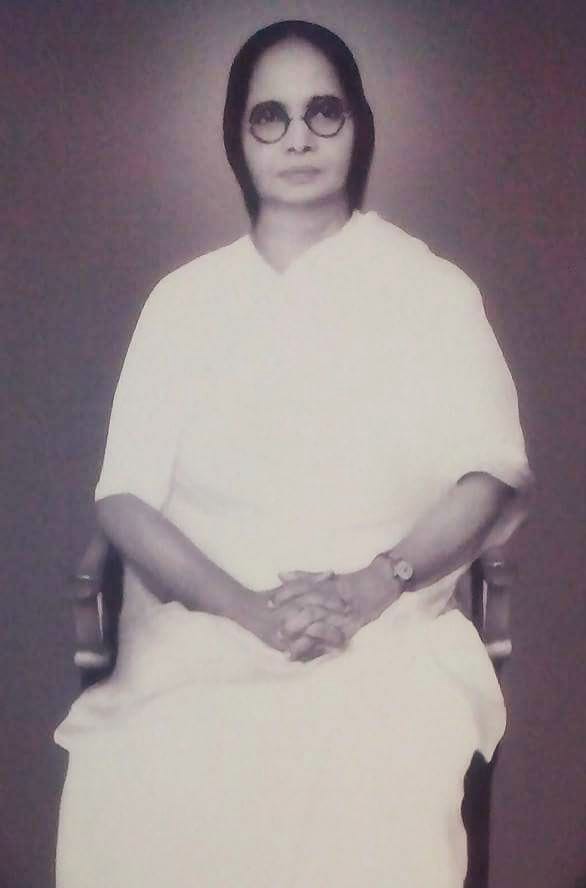
[Kochattil Kalyanikkutty Amma (1907-1997) (she used her married name in public, Mrs C Kuttan Nair), though little-known in Kerala today, was one of the most vocal, bold, and well-read feminists of the first generation in Kerala. She paid an enormous price for her unbowed attitude, but her life was so much richer for the expansion of the mind she gained through travels all over India and in Europe as well as her deep interest in the most exciting debates of her times, including contraception, women’s rights, and nationalism. I have translated some of her articles which may be read here, but below is an excerpt from her autobiography Pathikayum Vazhiyorathe Manideepangalum (Wayfarer-Woman and the Wayside Lamps). She studied in Queen Mary’s College, Madras in the early 1920s and remembered vividly the many great women and men she heard and met in the city which shaped her deeply cosmopolitan outlook.
Continue reading “College Days: Kochattil Kalyanikkutty Amma”Interview with Gandhi: Kochattil Kalyanikkutty Amma
[I am translating Kochattil Kalyani Kutty Amma’s autobiography that she published in 1991 and started writing at the age of 86, Pathikayum Vazhiyorathe Manideepangalum (The Wayfarer and the Wayside Lamps). Kalyanikutty Amma was a remarkable woman of her times when the first-generation of modern educated women were beginning to make their mark on cultural life in Malayali society. She was the daughter of a well-known medical practitioner Dr Moothedathu Krishna Menon and Kochattil Kochukutty Amma, and was educated in the Queen Mary’s College, Madras. She returned to her hometown Thrissur in the early 1920s and taught in the VG High School for girl students for more than 30 years. Outspoken and bold, she participated in the controversial inter-caste dining organized by the well-known anti-caste crusader Sahodaran K Ayyappan and married the freedom fighter and Gandhian C Kuttan Nair (and so she is also known as Mrs C Kuttan Nair). In the 1930s, she travelled all over British India to attend the All-India Women’s Conference and All-India Educational Conference meetings, acquiring a uniquely cosmopolitan sensibility. Her conversation with Gandhi about artificial contraception gives striking evidence for this.
However, I find that though she writes about this dialogue in her autobiography, there is much missing. Time and age probably took a toll, and some of what she says in her book is in direct contradiction with what has been recorded elsewhere, from 1935. Indeed, her sharp and critical intellect shines through the conversation as reported elsewhere, while besides omissions, there are serious errors in the autobiography. (For example, her claim that Gandhi favoured Hitler’s sterilisation policies. In the actual transcript reported at that time, it is the opposite. This is probably an error or a slip of memory.)
The full conversation is available as reported in The Hindustan Times, 1 November 1935. I reproduce it below so that readers of the autobiography may get a glimpse of her courageous questioning of someone who was regarded by very many as none less than the giver of the final word on all matters social at that time.]
Interview with Mrs Nair
MRS. NAIR: It is my feeling, especially after attending the All-India Women’s Conference at Karachi, that the women’s movement in India is not a representative one. It only represents the aristocracy and upper middle class. Can you suggest practical measures to make it a real mass movement?
GANDHIJI: The obvious remedy would be for the existing members to throw themselves in the khaddar and other village industry movements and thus develop the village instinct and take pride in depending on villages for all their wants.
MRS. N. Do you not think that co-education from very early days till the end of the educational career will help a great deal in removing the sex obsession that we see in our midst today?
G. I cannot definitely state as yet whether it would be successful or not. It does not seem to have succeeded in the West. I tried it myself years ago when I even made boys and girls sleep in the same verandah with no partition between them, Mrs. Gandhi and me sharing the verandah with them. I must say that it brought about undesirable results.
MRS. N. But do not worse things happen in purdah-ridden communities?
G. Yes, of course, but co-education is still in an experimental stage and we cannot definitely say one way or the other as to its results. I think that we should begin with the family first. There, boys and girls should grow together freely and naturally. Then co-education will come by itself.
MRS. N. As a teacher who has moved rather intimately with her students I have had occasion to come across some who, through ignorance and through information gathered from unhealthy sources during the period of adolescence, resorted to practices that were not conducive either to their physical or moral well-being. Will not the teaching of sex hygiene in schools in the most scientific and informal manner be really beneficial to our boys and girls.
G. Yes. And there should be no reason why one should not be able to talk freely on this matter.
MRS. N. On discussing very freely the question of birth-control with many a married woman, I find in many cases, especially in the case of those with large families, that motherhood is often thrust upon them. Woman has no freedom in the real sense of the word if she has no right over her body. So for the sake of the mother, whose health is drained away by the bringing forth of too many children and for the sake of children themselves, who should be a joy to us, but who now come forth? Unwanted in such large numbers, may not birth-control through contraceptives be resorted to, as the next best thing to self-control, which is too high an ideal for the ordinary man or woman?
G. Do you think that the freedom of the body is obtained by resorting to contraceptives? Women should learn to resist their husbands. If contraceptives are resorted to as in the West, frightful results will follow. Men and women will be living for sex alone. They will become soft-brained, unhinged, in fact mental and moral wrecks, if not also physical. Then, while I believe man to be the worse sinner, woman is not very far behind him. Both sin, on the whole. Woman is not always the victim. She should realize her majesty and train herself to say “No” when she means it.
MRS. N. But is there not too much of sex indulgence even now and is the introduction of contraceptives going to make so much difference in the sex life of the individual?
G. Undoubtedly there is already much of sex indulgence and even sex perversion. But contraceptives would be putting the cap on them. They will give a status to intemperate connection which it does not enjoy now.
MRS. N. Even in exceptional cases where a woman is too weak for child-bearing or where either of the parents is diseased, cannot this method be resorted to?
G. No. One exception will lead to another till it finally becomes general. In the cases stated above, it is better that the husband and the wife live apart. Contraceptives which are being tried in the West are leading to hideous immorality and I am sure after a few years, the Westerners themselves will realize their mistake. Do you not know that Mussolini in Italy is giving donations to parents with large families?
MRS. N. Perhaps Mussolini wants more fodder for cannon. G. What about the English and the Dutch among whom contraceptives are popular? Are they against war?
MRS. N. Can a poor country like India afford to have its present vast population, which seems to increase at a tremendously rapid pace?
G. Nature will solve the problem for us, if we allow Nature to have free play. Contraceptives are an unnatural interference with her laws. If people want to multiply like rabbits, they will have also to die like rabbits. If we become licentious, there will undoubtedly be Nature’s punishment descending upon us. It will be a blessing in disguise.
MRS. N. But is self-control possible for the ordinary man and woman?
G. Yes, under well-regulated conditions. Contraceptives are really for the educated people, who are the “sick” of humanity. I call them “sick” because their food and drink and the exceedingly artificial life that they are leading have made them weak-willed and slaves to their passions.
MRS. N. Do you then suggest, Mahatmaji, as a practical remedy for the over-indulgence in sex today, the releasing of the creative energy in man, through channels other than sex, by concentrating on matters like art, science, literature, etc.?
G. That is true so far as it goes. You have to be very careful in the choice of your food and drink and to keep both mind and body clean. Just as it is important to know what goes to the mind it is equally necessary to know what goes into the body. These are simple things, which will help you a great deal in the matter of self-control.
MRS. N. You know that in India there is no bar for physically unfit people to marry and bring forth children. Moreover, Hindu religion enjoins that none could get salvation without there being some male member to perform shraddha ceremony. This in normal circumstances is resulting in degeneration of the Hindu race. Are you, under these conditions, in favour of sterilization as is being done in Germany under Hitler?
G. There are crores of Hindus, especially untouchables who do not perform the shraddha ceremony. As regards sterilization I consider it inhuman to impose it as a law on the people. But in the case of individuals with chronic diseases, it is desirable to have them sterilized if they are agreeable to it. Sterilization is a sort of contraceptive and though I am against the use of contraceptives in the case of women, I do not mind voluntary sterilization in the case of man, since he is the aggressor.
MRS. N. Mahatmaji, you say that a woman should not allow motherhood to be thrust upon her but that she should be able to assert herself and definitely say “No” to her husband. Have you considered the fact that a Hindu woman especially has no economic status, and her defying her “Lord and Master” may result in disastrous consequences for her, and according to law she may be denied even maintenance, not to speak of a second home?
G. If you study statistics, you will find that what you say about the economic condition of a Hindu woman holds good only in the case of a microscopic minority. Do you not know that in Indian houses it is the woman that is generally the real master?
MRS. N. May I know how far your experiments in self-control in the Sabarmati Ashram have been successful?
G. It is very difficult to say. We have had individual cases of terrible tragedy, but those who visited the Ashram were much impressed by the general atmosphere of freedom, without sex consciousness, that prevailed there.
Communistkaary Without Membership: Howlath Beevi
[This is a translation of the autobiographical essay on the life of Howlath Beevi, a communist activist whose political life spans the decades from the 1950s to the present titled ‘Membershippillaatha Communistukaari’ in Alosyius D Fernandes and D M Scaria, Urumbettavar: Poraattangalile Sthreejeevitam, Alappuzha: Janajagrthi Publications, 2011, pp. 7-16. Howlath Beevi was a close aide of the legendary K R Gouri and followed her when she exited the CPM to form her own party.
Continue reading “Communistkaary Without Membership: Howlath Beevi”Red Post in a Hairdo: K Meenakshi and the Travancore Police
[This is a translation of the short piece ‘Mudikettinullile Chuvanna Kathukal’ in Alosyius D Fernades and D M Scaria, Orumbettavar: Porattangalile Sthreejeevitam (Alappuzha: Janajagrthi, 2011, pp. 23-27), on the communist labour leader of the 1940s from the Alappuzha district, a nerve centre of left mobilization of industrial workers in coir and cashew and agricultural workers, K Meenakshi. While hailed as a heroine of her times, she was more or less forgotten later, and came back to memory through the work of the feminist historian Meera Velayudhan. This piece simply uses her own first-person narration of her political life.]
Continue reading “Red Post in a Hairdo: K Meenakshi and the Travancore Police”Divine Mother: Janamma
[Accounts of the Great Opening of Malayali society of the 20th century acknowledge the rising of empowering spirituality, but it is almost always the male spiritual seers and practitioners who are celebrated – Sreenarayana Guru, Poikayil Appachan, and others. There is a gap to be filled here for sure: there were many women who sought a spiritual life, both among the first generation of educated women, as well as outside. Of them, not many sought an active public life, but Janamma, who rose to the leadership of the Pratyaksha Raksha Daiva Sabha initiated by Poikayil Appachan which advanced a powerful emancipatory project among the caste-oppressed dalit people of Travancore in the early half of the 20th century, was a striking exception. After Appachan’s passing, she led the movement (from 1941 to her passing till 1985) with considerable force and exceptional diligence, preventing it from fragmenting and protecting its core of faith. Known widely as ‘Ammachi’ – mother – when she rose to leadership, Janamma married Appachan at the age of fifteen in 1925. She was born and raised in Neyyatinkara, Thiruvananthapuram and her parents were early adherents of the Pratyaksha Raksha faith. She studied in a Christian school till Class Four but was unable to continue her education. Initially reluctant to marry him, she apparently changed her mind totally on seeing him. Before their wedding, he made her promise that she could care for the Sabha and also give him two sacred offspring. He is said to have addressed her as ‘akkachi’, which is, in Malayalam, a respectful way of referring to an older woman, an elder sister.
After his passing there was much trouble and dissension, includes disputes over the Pratyaksha Raksha Daiva Sabha’s assets. A decision was taken to send Janamma and her two young children back to her natal home, but a chief disciple of Appachan, Nhaaliyakkuzhi Asan, resisted this. It took time for his disciples to accept a young woman, considered inexperienced, as their leader, but in 1941, she was officially accepted as president of the Sabha – she was just 31 at that time. Janamma faced many hurdles, including the hostility of the very disciples who first supported her, but ably overcame all of those, taking over the leadership and even fighting court cases.
This is an excerpt from a memory of her shared by K C Vijayan who joined the PRDS through her. This describes his first meeting with her and reveals her style of spiritual teaching. From the volume Divyamathavu:Orma Anubhavam, Thiruvalla: PRDS Yuvajana Sangham, 2010, pp. 53-71]
… There were some rattan chairs on the veranda. Come, [I said], let us sit down. All three of us sat down. A little later, a girl came running, saw us, and quickly went off. A mother – Amma – came in suddenly. She looked fit and healthy. She looked at us closely. ‘Vandanam’, she said, greeting us. We were not familiar with the practice of greeting others saying ‘vandanam’. We too responded with ‘vandanam’. Who are you, Amma asked. We are pastors, we told her. We did not get up when she came up to greet us. The little girl who we had seen before came and stood beside her. Amma told her, koche, bring another chair here, let me too sit down with the sahibs. The chair was brought and Amma sat down in it … She asked us — what is the meaning of ‘vandanam’? We admitted that we did not know. She replied – [it is] the right which is the place of the masculine and the left, which is of feminine, join together and are pressed on the breast. The soul which resides in the heart bows to the supreme soul that resides in God. The soul resides in human, the supreme soul, in the Divine. Vandanam refers to this relation. Amma sang for us this song (song no 11, ‘I journey to reclaim the progeny of the Oppressed…). Who is God’s true heir? The relation between the soul and the supreme soul is eternal. Even when we die, we are dissolved in this relation. We understood the vandanam only when Amma told us all this. This is an important gesture that children of God must adopt when they meet and part. When we enter a shrine of the Divine, we must offer vandanam there and then also to the faithful assembled there. Amma taught us these things.
Then Amma asked us a question. When will Yesu (Jesus) come? Who told you of it? From where will he arrive? How? Tell me, tell me. But there is not a word in the Book that tells us when he will come. He was seen ascending to Heaven. And he will return in the same way. But nothing is said about the time of his return. The three of us broke into cold sweat unable to answer her. This Amma is no ordinary mother. She is endowed with divine grace…
After that, Amma asked, the Hindus have many sacred places and spiritual refuges like Kashi, Rameswaram, Varkala, Sivagiri, Palani, Sabarimala, and so on. Islam has Mecca and Medina and pilgrimage centres and sacred spots. The Temple of Jerusalem has become the spiritual refuge and heaven of the people of Israel. If so, do the indigenous Adidravida people who suffer in India have a refuge or a heaven of their own? Tell me, tell me quickly. I told you so many things. Tell me if you have a single word to put forward with courage. We were struck dumb, without a single word to speak or reply. We began to feel awkward. Because there was no sacred shrine, no refuge, to be seen for the indigenous oppressed people. The Divine Mother asked us again,
‘Tell me, how many doors does the Temple of Jerusalem have?’
Twelve, I said.
‘Why are there twelve doors?’
Don’t know, I replied.
Her Divinity was revealed then. She said,
The Twelve Doors of the Temple of Jerusalem
are meant for Heads of the Tribes.
Ruben, Simeon, Levi, Yahuda, Issakhar, Sebbalune, Naphthali, Gad, Asser, Yoseph, Benyamin.
The Divine Mother said, they are twelve gems… If the Temple of Jerusalem is for the generations descended from the twelve Tribal Elders, if only there was a thirteenth door, the oppressed people of Bharatham could have also entered. We said: there is no thirteenth door. Then the Divine Mother asked us. If so, why walk in those bylanes. Why not come here? Here the oppressed have a refuge, a shrine… (pp. 56-8)
Varaahan: A Chapter from Kamala Das’ Ente Katha
[This translated chapter is from Kamala Das’ Ente Katha, which has been one of the most controversial memoirs in Malayalam. The shock waves it produced in Kerala in the 1970s are hard to describe: she was attacked by both the liberal humanists and the leftists, abused as a harlot clad in a good housewife’s garb. It has also been celebrated as some of the most beautiful writing in Malayalam of the twentieth century. Kamala Das’ memoir in English, My Story and Ente Katha are related but distinctly different texts. Decades after, however, she rejected the memoir, claiming that it was entirely fictitious, written to please her husband who wanted her to make money from her writing.
Continue reading “Varaahan: A Chapter from Kamala Das’ Ente Katha”The Search for Love: Kamala Surayya
[This is from Kamala Surayya’s memoir Neermathalam Poothakaalam, in which she remembers her teenage love for her English teacher in school. It is one of the many avowals of queer desire in her writing. From Chapter 29 of Neermathalam… in Madhavikkuttyude Krithika Sampoornam, Kottayam: DC Books, 2009, pp. 1058-59]
“It was then that a new English teacher joined our school. Her name was Miss Sneha Laha. She was the eldest daughter of a psychologist from Ranchi. Her face was rather too long and pale. But her voice faltered in an extremely attractive way. A voice with a shattered spine. I had been seeking someone to adore. When she praised my essays and poetry I thought that she had begun to love me. My poems were about her. She read them, and smiled. I plucked a rose every day from our rose bushes to present to her. My expressions of love did not anger her. I used to tell Parukkutty [the maid] about her every evening. I believed that none but Parukkutty would be able to understand my passion for her.
Continue reading “The Search for Love: Kamala Surayya” Swatantryavaadini